Feeding Your Brain with Food and Beyond!

Feeding your brain is essential for every function we perform. Your brain is sometimes referred to as the “control center” of your body. Beyond helping you to think and remember clearly, your brain helps to regulate the rest of your body, like your breathing, temperature, hunger, and hormones. It’s important to keep your brain as healthy as possible for as long as possible to stave off chronic—often incurable—diseases like Alzheimer’s, and science shows us how to do this.

Your brain’s health is influenced by six fundamental pillars:

  • Exercise
  • Stress reduction
  • Sleep and relaxation
  • Socialization
  • Medications and supplements
  • Food and nutrition

In this article, we’ll go through each one of these pillars of brain health before diving deeper into specific and actionable strategies surrounding food and nutrition.

Exercise for brain health

Exercise is incredibly beneficial for physical and mental fitness, to de-stress, improve sleep, as well as keep your heart, lungs, and muscles healthy. What’s more, being physically active is a fundamental pillar of brain health. There are several types of exercise and all are beneficial.

Aerobic exercise, also known as “cardio” or “endurance” exercise, helps to get your heart rate up and your muscles warm. Examples of aerobic exercises include biking, swimming, running, and climbing stairs. This type of exercise benefits your brain because it helps to preserve existing brain cells and also promotes the growth of new ones.

Another type of exercise is strength or “resistance” training such as pushing or pulling weights or other heavy objects (like groceries). This is known to help build and maintain strong bones. Strength training also helps your brain by enhancing your concentration and improving your decision-making skills.

Stress reduction for brain health

We all experience stress. Stress is how the body and brain react to a threat or stressor. These reactions are often called “fight or flight.” They include increased heart rate and breathing and a heightened sense of focus. All of these physiological reactions are initiated by the brain when it detects the threat.

Once the threat is gone, the stress response relaxes and your body and brain can regain their normal balance. However, sometimes that stress lingers on for days, weeks, and months and becomes longterm stress. It’s this chronic stress that can negatively impact your brain. Chronic stress can effectively shrink the part of your brain responsible for memory and learning in your prefrontal cortex and can increase the part of your brain, the amygdala, that is receptive to stress.

While stress cannot be eliminated entirely you can learn effective techniques to better manage it and preserve your brain health. One very practical—but often difficult—strategy is to “just say no” to things you don’t actually have to do. Turning down unnecessary opportunities to take on more responsibility may help reduce the amount of stress you feel. 

Another strategy to reduce stress is to focus on the specific problem at hand in the present moment. This can help you see the current situation more clearly and make better decisions, to avoid turning it into an unmanageably large issue or perceiving the situation to be more difficult than it has to be.

A woman meditating to reduce stress.
Photo by Marcus Aurelius on Pexels.com

Finally, calming the mind through meditation or guided imagery can help reduce the feelings of stress by refocusing your attention on something positive and soothing.

Sleep for brain health

Getting your 7-9 hours of sleep each night helps your mood and ability to manage stress. Sleep also allows you to be better able to plan and run your busy life and ensure that you can have the energy to do what you need to do to maintain and improve your well-being .

One of the most important things you can do to get enough sleep is to foster a regular sleep schedule. By going to bed and waking up at about the same time every day—including weekends and when you’re traveling—you “train” your body and brain to get on a healthy sleep schedule.

Another strategy to help you get more sleep is to create a relaxing bedtime routine. That routine can start an hour or more before you need to sleep and can include things like dimming lights, putting your screens ( such as TV, internet, or smart phone) away, listening to soothing music or reading a book, or having a warm relaxing bath.

Whatever helps you get your sleep is going to also help your brain.

Socialization

Staying connected to a network of people you care about can help reduce stress, improve mood, and help to feel more supported in life. Your social network can include your spouse and/or partner, immediate and extended family members, friends, or others in your community.

You can socialize informally or spontaneously (like walking or chatting with a neighbor) or you can join organized activities like hobby groups, sports teams, or volunteering opportunities. The brain benefits of socializing even extend beyond people to pets. Studies show that pets can help you feel calm, improve your health, and enhance your social life, all of which can benefit your brain.

Medications and supplements

Depending on your personal health situation, you may be advised to take medications or supplements. These can be important to reducing your risks for serious conditions and slowing down the progression of diseases. Some of the medical conditions that are linked to deteriorating brain health include high blood pressure, diabetes, and excess weight. These can increase your risks of cognitive decline (reduced memory and ability to think) and developing dementia.

If your doctor is recommending medications or your registered dietitian is recommending supplements, be sure to take them as directed and go for routine monitoring or testing as required.

Food and nutrition to feed your brain

There are several foods and nutrients that promote a healthy brain by slowing cognitive decline and reducing your risk of Alzheimer’s disease. University researchers developed the MIND diet to emphasize foods that are rich in antioxidants and critical brain nutrients such as vitamins and other plant-based phytochemicals. 

Here are some key foods and nutrients to boost your brain health.

Omega-3 fatty acids

Omega-3 fatty acids are a group of essential fats that promote heart and brain health. Some of the best sources of omega-3s are fatty fish such as salmon, herring, and sardines. The MIND diet recommends at least one serving of fish each week. If you don’t love fish, omega-3s are also found in nuts and seeds such as flax, chia, walnuts, and soy.

Salmon is one of the best sources of omega-3s.
Photo by Malidate Van on Pexels.com

More plants

Plants contain more than vitamins and minerals, they’re also a source of fiber and phytochemicals. Eating more plants helps more than only your brain, it’s also associated with better heart health and weight maintenance. If you want more ideas and inspiration for plant-focused eating, I invite you to subscribe to my free weekly healthy recipe here.

Some of the top plants for brain health are deeply-colored fruits and vegetables like berries, leafy greens, and broccoli. The MIND diet recommends vegetables every day, at least six servings of greens each week, and at least two servings of berries each week.

A salad of leafy greens and berries is excellent for brain health.
Photo by Alberta Studios on Pexels.com

Spices and chocolate

Spices and dark chocolate contain antioxidants called flavonoids. These compounds can help improve blood flow to the brain and reduce inflammation. These can be found in high amounts in turmeric, cinnamon, ginger, and dark and unsweetened chocolate.

Spices help to improve blood flow to the brain and reduce inflammation.
Photo by Marta Branco on Pexels.com

Coffee and teas

Did you know that coffee can help to improve your memory and ward off dementia? Up to three cups of black coffee per day is recommended. When it comes to teas, black and green teas contain antioxidants for brain health.

Moderate consumption of red wine

Resveratrol is a compound found in red wine and the skin of red grapes. It is also an antioxidant and is thought to be able to reduce cell damage and protect against the formation of plaques in the brain. Too much alcohol is not good for your brain either, so it’s important not to overdo it. Try to stick with no more than one glass of red wine per day if you’re a woman and no more than two glasses per day if you’re a man. You can also consume resveratrol from drinking red grape juice, which has the added benefit of being alcohol-free.

Whole grains

Whole grains like oats and quinoa are rich in brain-healthy B-vitamins and fiber, making them an important part of the MIND diet. B-vitamins are essential so that the brain can create energy, repair DNA, maintain the proper structure of neurons (nerve/brain cells), and create essential neurochemicals for optimal function. B-vitamins also act as antioxidants to reduce the harmful effects of free radicals that can damage all cells, including brain cells.

Vitamin D

Vitamin D is also known as the “sunshine” vitamin because your skin makes it when it’s exposed to the sun. Low levels of vitamin D are associated with increased risks for brain disorders such as Alzheimer’s. You can increase your vitamin D levels by going in the sun for 5-15 minutes three times a week. You may need slightly more time if you have darker skin or live in a more northern latitude. Try not to get too much sun without sunscreen as it can increase your risk for skin cancer. Vitamin D supplements are also widely available but be sure to purchase reputable brands that sell products with third party certifications. You can learn more about dietary supplements and shop professional-grade products here.

Limit red meat

Consuming too many foods high in saturated fats is linked with an increased risk for heart disease and Alzheimer’s disease. The MIND diet recommends no more than four servings of red meat per week. Try limiting your red meat, butter, and dairy whenever you can and consider substituting with beans, lentils, and soy.

Final thoughts

There are many things you can do to bolster your brain health. They include a number of healthy habits such as getting exercise, reducing stress, getting enough sleep, socializing with others including with pets, and following recommendations for medications and supplements. When it comes to food and nutrition for brain health, try to get enough omega-3s, more plant foods, spices and chocolate, coffee and tea, vitamin D, and a bit of red wine. Limit the amount of red meat you consume.

If you’re interested in learning more about how you can implement these six essential brain health strategies into your life, consult a health professional who can help. 


How to Reduce Food Waste to Save Money, Time and the Environment

If you’ve ever tossed out a container of yogurt that’s approaching its date, discarded veggies that have gone limp, or thrown out a salad that’s just starting to turn a bit brown around the edges, you’re not alone. In celebration of Earth Day this year, I will share some practical ways to reduce food waste to save money, time and most of all, our environment!

While food waste is a worldwide phenomenon, the U.S. is a big contributor. Would you believe that food takes up more space in U.S. landfills than any other type of waste? It’s unfortunately true. Right here at home up to 40 percent of the entire U.S. food supply goes to waste. That’s almost 20 pounds of food per person every month. 

Not only are you reducing landfill waste, just imagine how much time and money you could save even if you reduce a portion of your this waste. Before we dive into the hacks, let’s talk a bit about some of the many benefits you could see by reducing food waste.

The impact of food waste is wide-ranging. The less food we waste, the more time and money we can save—and these are so very important. By reducing the amount of food wasted, farmers can use less fresh water, land, fertilizers, etc. because they’re not producing food that’s going to be discarded. Reducing food waste also reduces the amount of food that needs to be processed, transported, and sometimes stored in un-recyclable packaging and energy-intensive refrigerators and freezers. Plus, with less food waste, less space is used in landfills and less greenhouse gas is produced. Not to mention that there are a few not-as-obvious societal impacts that I’m going to discuss as well.

Benefits of reducing food waste

Save time 

Leftovers may not be the most glamorous meals, but they allow you to cook once and eat twice or more. This uses your precious time more efficiently because you’re not making a huge effort to decide what new meal or snack to make, and then spending even more time preparing.

Save money

The amount of produce wasted by an average American family of four costs about $1,600 per year. Imagine what you could do with that amount of money by simply buying only what you need and are going to eat, without unnecessary excess.

Save the environment

Reducing food waste helps us use critical resources like our land, water, fertilizers, packaging, transportation, storage, etc. much more efficiently. That’s because these investments will go toward food that we’re going to use and enjoy, not producing excess that’s going to be discarded. These efficiencies can help to reduce our environmental impact. 

Discarding food not only wastes the water and energy that went into all of the steps needed to get the food to you, but when it’s in a landfill, food waste releases greenhouse gases like carbon dioxide and methane. The U.S. Environmental Protection Agency (EPA) estimates that 95 percent of food wastes end up in landfills instead of the compost.

Food waste collected in a truck.
Photo by Kelly on Pexels.com

Boost your relationships and community

When you share extra food with people you know and care about, you’re building relationships with them. There are plenty of people who use community services to access food and that number is growing. By sharing food with them, you can help increase food security in your community.

Hacks to reduce your household food waste

It’s true that food is wasted at every level from farm to fork. Farms, manufacturers, grocery stores, and restaurants all waste some of their food. While you may not be able to control these other areas, reducing your own food waste can make a sizable difference. That’s because household food waste accounts for the biggest amount of food wasted — more than restaurants, grocery stores, and food service companies combined.

1 – Freeze food and enjoy your leftovers

Sometimes we buy or make too much food to eat in one day. It’s often the tiny bit of leftover that we don’t feel it’s worth saving that really adds up. If you force yourself to eat more than you need in the name of reducing food waste, you may still be wasting food and your body bears the burden. Instead, safely store uneaten food in a sealed container in your fridge or freezer, and then enjoy it another time as a “leftover.”

Leftovers can also save you time and money when you’re super-busy because you can quickly take a meal out of the fridge or freezer instead of spending the time and money to prepare or buy a whole new meal.

2 – Know your dates

One of the biggest reasons people throw away food is because they think it’s spoiled. This is understandable because no one wants to eat or serve food that has gone bad and may make them sick. Sometimes, the date that a food goes bad is not always clear because manufacturers may use different dates on their packages. In an effort to reduce confusion, the U.S. FDA is recommending the use of:

  • “Best if used by” to describe the quality of the food (not its safety); the food may not taste or perform as expected but it’s still safe to consume as long as it was stored properly.
  • “Expires on” is mostly reserved for infant formulas which should not be used beyond that date.

3 – Try “imperfect” or “ugly” food

Did you know that food is sometimes dumped because it doesn’t look “perfect” enough? Looking for “imperfect” or “ugly” food, or food that’s approaching its “Best if used by” date, is another way to save money and reduce food waste. Some markets and grocery stores package up food that may be “ugly” or not as fresh as their latest shipment and sell them at lower prices than the “perfect” food we’re used to seeing. Some companies even make a business of delivering imperfect foods to your door. Many of these imperfect foods can still be used in smoothies, casseroles, soups, and baking. If you need inspiration for recipes, you can access my healthy recipe of the week here.

Be sure to check to make sure the imperfect foods are still safely edible and are not spoiled; then, prioritize freezing or eating these foods first.

By choosing “imperfect” or “ugly” foods when you’re out shopping you can help prevent it from going to waste while saving money at the same time.

Imperfect pears
Photo by Marta Dzedyshko on Pexels.com

4 – Share extra food

If you know someone who would love to join you for a meal or appreciate your leftovers afterward, consider sharing with them. You can invite them over or drop your extra food off to them. 

Another idea is to find a food bank or shelter in your area and see what types of food they accept. If you have extras of those, simply donate it to them. If you want to go the extra mile, you can even consider donating the amount of money you saved from reducing food waste to your local food bank or shelter so they can purchase what is most urgently needed.

5 – Optimize your fridge and freezer

Don’t forget to regularly check your fridge and freezer to keep an eye on food that may be approaching the end of its useful life. If you find any, enjoy them first. Create a meal or two a week that would use the “on the way out” produce and meat into delicious dishes. Some of my favorites are creamed vegetable soup made with creamy coconut or cashew milk, Indian vegetable curry made with protein of choice, and a salad/grain bowl. 

Once the meals are cooked, you just renewed the shelf life of those ingredients for another 2-3 days in the refrigerator and another 1-2 months in the freezer. To keep your food fresh as long as possible, Keep your fridge set to a maximum temperature of 40°F and your freezer to 0°F or lower.

6 – Compost and use organic collection programs

The U.S. EPA estimates that just 4.1 percent of wasted food is composted, so composting is a huge area of opportunity. If you have a backyard and ability to compost food scraps to make nutrient-rich soil, that is a great place to start. Alternatively, if your city, town, or region has a composting program, you can contribute to that instead of putting food waste into the garbage which goes to the landfill.

Collecting produce scraps in paper bag for the compost.
Photo by Sarah Chai on Pexels.com

7 – Use a grocery list and meal plan

When you plan out the meals you want to eat and stick to your grocery list, you’re less likely to purchase and make too much food. If you create a thoughtful grocery list—and stick to it—you can buy only what you need.

How meal planning can help reduce food waste

Having a plan for your meals—whether you make the plan yourself or invest in one that works for you—is a great way to reduce your food waste. That’s because when your meals are planned out, you can create a grocery list of the foods you need for that plan. If you double-check your pantry, fridge, and freezer before adding something to your grocery list, and stick to the list when you’re out shopping, you will buy only what you need and are planning to eat. 

By using a meal plan to reduce the amount of excess food you buy in the first place, you’re cutting down on food waste at the source. This is called “source reduction.” According to the U.S. EPA, source reduction is the most impactful step toward reducing food waste, so it’s a great one to focus your efforts on. 

Meal planning has other benefits beyond reducing food waste and saving you time and money. Using meal plans can help you create meaningful and sustainable changes for your health. For example, a recent study published in the Annals of Behavioral Medicine looked at people who joined a weight loss program. They found that participants who planned more of their meals lost more weight than than those who planned fewer meals.

Final thoughts

By reducing food waste we can help to save time and money, reduce our impact on the environment, and even build our relationships and communities. It truly is a win-win-win situation.

One of the best ways to tackle this problem is by using a meal plan. Meal plans can inform your grocery list and then reduce the amount of extra food purchased when you go shopping at the market. But, not everyone wants to spend the time and effort to create their own plans. If this is you, just leave me a reply and I would love to help with your meal plans!


Reset Your Diet: 3 Easy Tips for Eating Healthier

Eat healthier is one of the top 3 New Year’s resolutions for 2023 in the U.S. according to Statista Global Consumer Survey. No surprise here! With the growing presence of plant-based milk products, gluten-free alternatives and meat substitutes in the supermarkets, you would like that healthy eating is a piece of cake (no pun intended). Not so! More choices often lead to confusion and inaction.

To kick off the new year, here are 3 easy tips for resetting your diet. These are basic elements of healthy eating that most people can benefit regardless of their specific dietary preferences or restrictions.

Boost Hydration

When the body needs water our brains send the signal of thirst – an essential survival mechanism that maintains fluid balance. Having a pre-filled water flask always on hand is one of the best habits we can practice to ensure proper hydration, but even with the super sleek containers available today, most people still do not achieve adequate water intake. This is important to note, as every process in the body requires water – not enough and you could face more than dehydration. Kidney stones, loss of cognitive function, constipation, and fatigue can all be related to poor fluid balance.

So how much water do you need? The Mayo Clinic recommends about 15.5 cups (3.7 liters) of fluids a day for men and about 11.5 cups (2.7 liters) of fluids a day for women. Building a habit of drinking more water in combination of drinking fun beverages will make hydration easier.

Try these delicious recipes

Cilantro-Lime Melon Cooler: honey dew + cilantro + matcha green tea + lime juice + cucumber

Ultimate Aqua Fresca: strawberry + mint + hibiscus tea + lime + sparkling water

Fuzzy Peach-Basil Chia Fresca: peach + basil + peach green tea + lemon + chia seed

Blackberry-Sage Cooler: blackberries + 1 sage leaf + berry green tea + sparkling water

Citrus Rosemary Refresher: nectarine + green tea + grapefruit + cucumber + few rosemary leaves with stem for garnish

Fiber Up

Most people consume less than half the amount of fiber they need for good health. It is recommended that we get 25-30 grams of fiber a day. Fiber is a type of carbohydrate that your body cannot digest and is important for digestive health and weight maintenance as well as lowering risk of diabetes, heart disease, and certain types of cancer.

There are two types of fiber: soluble and insoluble. They serve different functions in the body so we need them both.

Soluble fiber dissolves in water and acts like a sponge. When eaten it creates a small gel-like mass that helps lower blood glucose and cholesterol levels. It also works with your liver to escort excess hormones, like estrogen and testosterone, from the body. Good sources include: oats, oat bran, beans, lentils, chia seed, flax meal, nuts and seeds, barley, citrus fruits, apples, strawberries, blueberries, pears, and sweet potatoes.

Insoluble fiber does not dissolve in water and acts like a broom, facilitating movement of food through the digestive tract. It also contributes to bulking up stool which promotes regularity and reduces constipation. Good sources include: whole grains, vegetables like zucchini, cauliflower, broccoli, carrots, avocado, and leafy greens.

Fiber is only found in plants which is why consuming a plant-rich diet is so important. Include lots of vegetables, fruits, whole grains, seeds, nuts, and beans in your daily meals can help to boost your fiber intake.

Eat Whole Grains

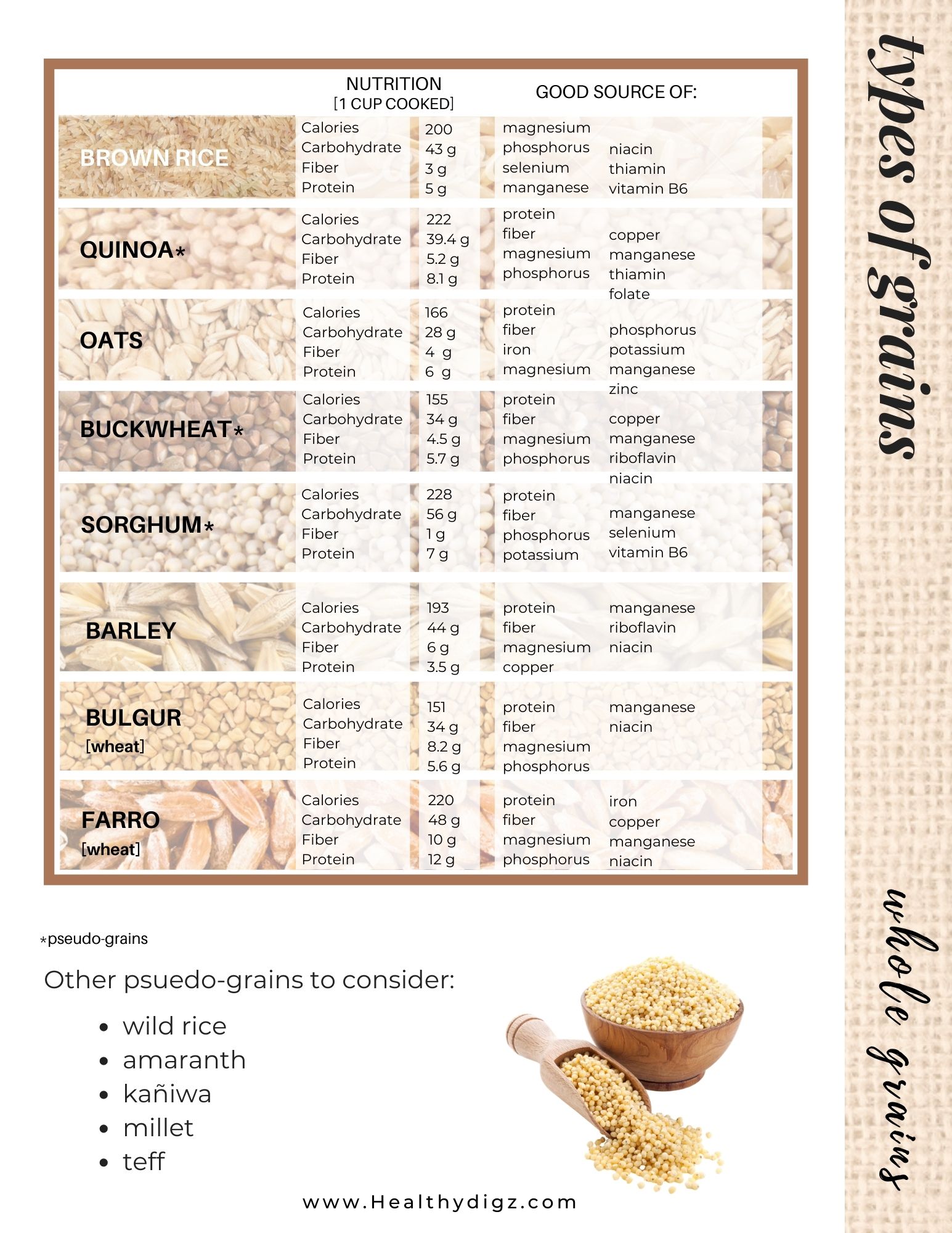
Whole grains are an excellent source of nutrients such as minerals, vitamins B and E, and fiber (see chart below). They are also rich in disease-fighting antioxidants and phytochemicals. Research suggests that whole grains contribute to reduced risk of cancers (particularly colorectal cancers), heart disease, stroke, diabetes, and obesity. 

When shopping for packaged grain foods such as bread and crackers, look at the list of ingredients first – the first word should be “whole”: whole oats, whole wheat flour, etc. If the word “whole” is used to identify the second ingredient, the product may contain as little as 1% whole grains. You can also look at the fiber content listed on the nutrition label in conjunction with the ingredients list to help you make an informed decision. Look for fiber content > 2 g per serving. 

Final Thoughts

There is no one diet that works for everyone but there are eating habits that are good for every body. As you reset your eating for a new you in 2023, start with a check on your liquid and food choices. Are you getting enough fluid and fiber everyday? Are you choosing whole grains over refined grains? Where can you improve and set goals to do so. Consistency will get you closer to a healthier you. Have a Happy and Healthy New Year!


Develop Healthy Habits with Proven Strategies

When it comes to developing habits that improve health, many people find that stacking them one on top of the other makes the process a lot easier. This involves linking a new healthy habit to an already established habit so that you don’t have to focus as much energy on making the change. This approach is called habit staking.

What is Habit Stacking?

Habit stacking is a method of behavior change that involves creating a list of small, manageable tasks that you can complete each day to help you reach your goal. The best part of habit stacking is that it doesn’t require a huge time commitment – you can start small and gradually add on as you go.

There is a lot of evidence behind habit stacking, and research has shown that it can be an effective way to make changes in your life. One study found that people who stacked their new habits were more likely to stick with them over time. In addition, they found that when people tried to make too many changes at once, they were less likely to be successful. So if you’re trying to adopt a new habit, it might be helpful to stack it on top of an existing one.

What are the methods of habit stacking?

Chain Method

Chaining involves linking a new habit to an established one. For example, you might want to start taking recommended supplements every day, so you chain it to an existing habit like brushing your teeth. Every time you brush your teeth, you take
your supplements right after. Set yourself up for success by keeping the supplements right next to your toothbrush – you want to make it as easy as possible to add the new habit. The easier and more convenient the chained habit is, the more likely it is that you’ll adopt it.

Sequence Method

Sequencing involves doing a series of existing, related habits in order and adding in a new one. For example, if you’re looking to increase your intake of water, you might want to wake up, make coffee, drink a glass of water, eat breakfast, and then brush your teeth. Sequencing your habits can be helpful because it can make them feel more manageable. When you have a specific order that you do things in, it can make it feel less like you’re just randomly doing things and more like you’re following a plan. Plus, it can help you to remember to do all of your habits, since you’ll know that you have to do them in a specific order.

Pairing Method

Pairing involves pairing two habits together so that they happen simultaneously. This can be particularly powerful if you “temptation bundle” – pick something you really love doing and add a new habit to the mix. For example, let’s say you
really love listening to podcasts or audiobooks – bundling this existing pleasure with a new habit like walking. Maybe you’re enjoying a new TV series – download it on a mobile devise and view it while on the treadmill. This way you will naturally look forward to your daily exercise as it is associated with something you really enjoy.

Choose a Trigger

The first step with any type of habit stacking is to choose a trigger. A trigger is something that you do on a regular basis that you can use to remind yourself to perform your desired behavior. For example, if you’re trying to eat more fruits and vegetables, you might use the trigger of brushing your teeth in the morning as a reminder to eat a healthy breakfast. Or, if you’re trying to cut back on sugary snacks, you might use the trigger of taking a break at work as a reminder to eat an apple instead of heading for the vending machine. Choose a trigger that is already part of your daily routine so that it’s easy to remember.

Start Stacking

Think about the different types of habit stacking and start with a new habit that fits well into your daily routine. Begin with stacking one habit to an established one. Perform the stack for at least one week or two until it seems easier. Once you’re in the flow, you can add another habit to the stack. Research shows that it takes 3 or more weeks to establish a new routine so stick with it.

The key is to create a chain of healthy behaviors that becomes automatic and second nature. Eventually, these behaviors will become part of your daily routine without any effort on your part. And when they do, you’ll be well on your way to
improving your nutrition and overall health!