Simple Strategies for Better Wellness

Wellness isn’t just a buzzword; it’s the foundation of a good life. By focusing on your wellbeing, you improve your health, reduce the impact of stress, and set yourself up for a more satisfying life.

For many people, improving their health and wellness seems impossible. However, with the right strategies, it’s much easier than it may appear. If you aren’t sure where to begin, here are some simple ways to achieve better wellness.

Start Moving

Most adults need 150 to 300 minutes of moderate-intensity activity or 75 to 150 minutes of high-intensity exercise each week. While you can do this with longer sweat sessions, breaking the time down into 10-minute intervals also works. So, if you’re struggling to cram exercise into your day, focus on fitting in 10-minute sessions wherever you can, as that might feel more manageable.

It also helps to pursue exercise that you will enjoy. Explore Our Indian Culture’s dance classes for Indian dance lessons and workshops that will have you having fun while breaking a sweat.

Eat Healthier

Not to minimize the dollars and effort required to maintain healthy eating, but good food pays off. It has been proven that diet is linked to preventable diseases such as type 2 diabetes, heart disease and cancer. Unhealthy diet contributes to approximately 678,000 deaths each year in the U.S.

With the ever-evolving diet trends, choosing healthy foods can be confusing. It helps to find a trusted source of information from a credentialed professional like a Registered Dietitian.  

You can start by trying delicious new foods while boosting your immunity. With some creativity and an open mind, you’ll discover lots of ways to eat healthy on a budget.

Sushi Bowl

Get Quality Shuteye

In general, adults need at least 7 hours of quality sleep every day. By sleeping that long, you can have enough sleep cycles to ensure specific body processes can happen, ensuring your muscles, brain, nervous system, and more are able to repair and recover from the day.

Ideally, you want to make sure you give yourself enough time every day to get the sleep you need. Additionally, if you have any sleep disorder symptoms, seeing a doctor is essential. With a sleep disorder, you might not be getting the quality rest you need. By scheduling a medical appointment with your physician, you can get an assessment of your situation and create a treatment strategy that can help.

Schedule Some Me-Time

When your life is busy, it’s normal to focus on other people’s needs. You might prioritize your family or work over yourself, and while that’s okay on occasion, it can be detrimental to your wellbeing if you never come first in your own life.

Photo by Samuel Theo Manat Silitonga on Pexels.com

Scheduling some me-time is critical for your wellbeing. It lets you focus on yourself, giving you a chance to do things that you enjoy. With regular me-time, you’ll have more energy, reduce stress, and have an easier time being at your best. Not only is that good for you, but also it ensures you can be there for others, making it a win-win.

Reduce Job Stress

On a typical workday, you spend about a third of your time at your job if you work full-time. If you aren’t happy while working, the fact that your overall well-being suffers shouldn’t be a surprise.

When your job isn’t challenging, you may become bored and frustrated. If your workplace is toxic or your workload is unmanageable, that could lead to feelings of depression, anxiety, or burnout, all of which can harm your wellbeing.

In some cases, the best thing you can do for yourself is to plan your exit. By moving forward with a career change, you can start in a role that ignites your passion, keeps you engaged, and brings you a new level of satisfaction.

If you already have the skills you need for a new job, you may simply need to launch a job search. If you don’t, then signing up for an online degree program could be an excellent move. With an online college, you get a flexible approach to education that can put you on the path toward something better, in business, IT, and many other fields. Then, once you’re done, you can begin your new career with ease.


Contributor: Scott Sanders,  www.cancerwell.org


A Guide to Successful Gluten-free Baking

Baking is a science. Unlike traditional wheat-based flours, gluten-free flours typically require additional ingredients that contribute to successful gluten-free baking when it comes to binding, texture, and structure (due to the absence of gluten). Each flour has a different flavor, texture, and nutritional attributes. Understanding the personality of each gluten-free flour will help you choose the most suitable one for your recipe. 

Before we get into the types of gluten-free options and how to make DIY flour blends, let me answer a few basic gluten-free baking questions.

What is Gluten?

Gluten is a type of protein found in some grains that provides structure in baked goods. The most common gluten-containing grains include wheat, barley, and rye. It’s also found In relatives of wheat like spelt and kamut.

Can I just substitute a gluten-free flour for all-purpose in my favorite recipes?

It might be tempting to sub a gluten-free flour for all-purpose 1:1 and hope for the best! However there’s a good chance it might not turn out quite right. Some baked goods are more forgiving than others. Use the information below to determine if and when you need to alter amount and/or add ingredients like starches or binders.

How will gluten-free flour affect the baking time?

Most gluten-free baked goods will require a longer baking time to prevent a gummy, mushy texture. The reason? More liquid. The “toothpick test” isn’t the best indicator of doneness so make sure your oven is calibrated properly and use the time instead.

What about store-bought gluten-free flour? 

Some popular flour companies now make 1:1 gluten-free baking flour blends that already have a proper mix of flours and starches (like xanthan gum). It’s a great option in a pinch because you can use as a 1:1 replacement for all-purpose flour and it mimics results of all-purpose flour. Just note that these are typically rice-based, so they aren’t as nutritionally dense as some of the other options mentioned here. They can also be expensive.

Photo by Klaus Nielsen on Pexels.com

Rice Flour

Light, mild and easy to digest. Often used to make noodles in Asian cuisines. It’s also rich in carbohydrates and low in fat. A common ingredient In store-bought flour blends because it’s texture is most similar to all-purpose.

Chickpea Flour

Chickpea (or garbanzo bean) flour contains significantly more fiber and protein than others on this list. It’s also a good source of plant-based iron. Popular in Middle Eastern and Indian cooking.

Millet Flour

Millet flour has a mild, sweet flavor and a cake-like crumb. It works great in muffins and quick-breads. It’s also a very nutritious whole grain.

Buckwheat Flour

Despite what the name suggests, buckwheat is naturally gluten-free. It’s often used to make noodles (soba), pancakes and Russian blini. This flour adds a beautiful deep brown color to baked goods and has a nutty flavor.

Almond Flour

This may be the most versatile of the bunch. Almond flour has a high fat content which equates to moisture, tenderness and rich flavor. It can produce a “heavy” final product at times which might not rise as easily as traditional wheat flour baked goods. 

Coconut Flour 

It has a sweet coconut flavor and is very high in fiber. Note that it is also highly absorbent, so you’ll only need a small amount (1/3 or 1/4 as much) and you’ll likely need to combine it with another flour for structure.

Oat Flour 

Oat flour is made from milled oats and has a mild flavor. It’s light texture lends soft and fluffy quality to baked goods. Remember that oats need to be certified gluten-free as they are often cross-contaminated. 

Cassava Flour 

Cassava is rich in carbohydrates and high in fiber. This flour is similar to wheat, so works well in a variety of baked goods.

Why use binders and starches? 

In baking, gluten allows dough to come together and become elastic (think pizza dough!). When working with gluten-free flours, you’ll need to add an extra ingredient that does its job. This is where binders (like gums) and starches come in. In baking, these ingredients help hold everything together. They also add much-needed moisture and a more pleasant texture. Too much can lead to a gummy final product so it’s important to use the correct amount. See below for a description of some of the more popular options available. 

CornStarch

Commonly used to thicken sauces and and soups. It’s not usually recommended in baked goods because it can taste too starchy. 

Arrowroot Powder

Flavorless. Similar to cornstarch and a great substitute for those who avoid corn. Use it to thicken sauces or pie filling. Sub 2 teaspoon for every 1 tablespoon of cornstarch. 

Tapioca Starch

Also known as tapioca flour and is used as a thickening agent. It also provides “chew” and elasticity. It can contribute to browning. 

Potato Starch

Similar texture to cornstarch and tapioca starch but derived from white potatoes. Helps bind recipes together and keep baked goods tender. 

Guar Gum

Adds structure or “glue” to baked goods as a way to prevent a crumbly texture. It has 8x the thickening power of cornstarch! 

Xanthan Gum

Similarly to guar gum, xanthan gum helps prevent crumbling in baked goods by providing structure and strengthening elastic networks. It’s corn-based. 

DIY Gluten-Free Flour Blends 

If you want to give gluten-free baking a try and prefer to experiment with your own flour blends, start with one of these! Option one is rice-based and will yield results most similar to all-purpose (wheat) flour. Option two is oat-based, which is a high-fiber choice. Option three is made with almond flour to create a dense, moist and ultra satisfying final product. 

Rice Flour Blend

  • 1 1/2 cups brown rice flour 
  • 1/4 cup white rice flour 
  • 1/4 cup tapioca flour 
  • 1/2 cup potato starch 
  • 1 tsp xanthan gum 

Whisk all ingredients in a large bowl, then transfer to an airtight container for storing. 

Oat Flour Blend

  • 1 1/2 cup [certified gluten-free] oat flour 
  • 1/2 cup tapioca flour 
  • 1 tsp xanthan gum 

Whisk all ingredients in a large bowl, then transfer to an airtight container for storing. 

Almond Flour Blend

  • 2 1/2 cups blanched almond flour 
  • 2 1/4 cups buckwheat flour 
  • 1 3/4 cup potato starch 
  • 3/4 cup arrowroot powder 

Whisk all ingredients in a large bowl, then transfer to an airtight container for storing.

Baking with gluten-free flour may seem a little intimidating at first. But you really can’t go wrong if you start with one of these flour blends. Once you determine the flavor and texture you desire in your baked goods, you can fine tune your flour recipe. Have some fun in your discovery and put your personal stamp on your creation. Happy Baking!


How to Heal Your Leaky Gut

Harvard Health calls it a “medical mystery” and “mysterious ailment.” It’s been linked to everything from gut troubles, autoimmune diseases, and even mental health concerns.

I’m talking about “leaky gut” or “intestinal permeability”—have you heard of it?

Many doctors and the established medical community may not recognize it, but there is growing research to suggest it is associated with many health conditions. Working in tandem with integrative medicine doctors, I have been able to help many people return to better health by healing their leaky gut.

What exactly is “leaky gut?” Do you have it? How does it happen? What can you do about it?

What is “leaky gut?”

Your gut (gastrointestinal system) is not just a 30-foot-long muscular tube (tract) that starts at your mouth and ends with you going to the bathroom. In fact, It’s a vast and complex system with many functions. It breaks down food into smaller digestible bits, keeps it moving through the gastrointestinal tract, and skillfully absorbs water and nutrients while keeping out harmful substances. More and more research shows that these essential gut functions are interconnected throughout your body—to everything from your heart to your brain.

Your gastrointestinal tract is lined with millions of cells, all side-by-side in a single layer. In fact, this layer, if spread out flat, covers 400m2 of surface area! Those intestinal cells help the body to absorb what we need from foods and drinks, while keeping out what needs to stay out. It acts as a gatekeeper allowing in what your body uses, and keeping out the rest which ends up as waste. This ability to selectively allow some things in our gut to be absorbed while keeping others out is only possible if the cells are working properly and physically joined together very tightly. The bonds that keep the cells tightly together are called “tight junctions.”

Leaky gut happens when the tight junctions aren’t so tight anymore. The cellular barrier is irritated and weakened, allowing tiny holes to appear. These perforations allow things that normally would stay out of the bloodstream get into the bloodstream. Things like food particles, waste products, and bacteria.

When these get into the bloodstream your immune system is triggered to start fighting them. Similarly to how your immune system starts fighting the cold virus and causes inflammation. This immune reaction is normal and helps keep you healthy. 

Do you have a leaky gut?

The symptoms of leaky gut are similar to those of other digestive conditions like inflammatory bowel disease, celiac disease, and Crohn’s disease. Symptoms can include diarrhea, constipation, cramps, bloating, food sensitivities, or nutrient deficiencies. 

But, because the food particles, toxins, and bacteria have been absorbed into the bloodstream which travels throughout your body, symptoms can appear anywhere. Studies show that leaky gut may feel like fatigue, headaches, confusion, difficulty concentrating, joint pain, or skin problems (e.g., acne, rashes, eczema). Leaky gut is also linked with diabetes, polycystic ovarian syndrome, liver disease, chronic fatigue syndrome, and autoimmune diseases such as lupus and multiple sclerosis. There may even be links to anxiety and depression.

Many of these gut and non-gut symptoms and conditions are linked to chronic inflammation, but more research is needed to understand how they are connected.

Even if you have some of these symptoms, the fact is, it’s very difficult to diagnose a leaky gut, nor how leaky it is. This means that, while there are some biomarker tests, there isn’t a reliable diagnostic test available just yet. So, it’s difficult to say whether your symptoms are from leaky gut, or whether leaky gut is a symptom of another issue. 

What causes leaky guts?

It’s not 100 percent clear what causes those bonds to loosen and result in tiny perforations in the gut barrier. In fact, we’re just starting to understand how the gut barrier functions and there is a lot of ongoing research.

Part of leaky gut may be due to the genes you inherit from your parents. It can also be from medications or gut infections. Leaky gut is also linked to eating a diet that is low in gut-friendly fiber (adults should aim for 25-30 g of fiber per day). It can also be from consuming too much added sugar and saturated fat. Leaky gut may even result from stress or an imbalance in the diversity and numbers of your friendly gut microbes.

Also, as you age your cells can get damaged more easily and heal slowly, including the cells that line your gut. This can leave you more susceptible to loosening of the gut barrier.

What can you do about a leaky gut?

One way to approach a suspected leaky gut is to address inflammation and eat a more gut-friendly diet. This means reducing excessive alcohol and processed foods that tend to be high in fat and sugar or artificial sweeteners. It’s also a good idea to avoid foods that you’re allergic or sensitive to. For example, if you have diagnosed celiac disease, you want to be sure to stay away from gluten, as exposing your gut to it can cause a large inflammatory response.

Instead, enjoy more foods rich in gut-friendly probiotics and fiber – which is a prebiotic that feeds your friendly gut microbes. These include:

  • yogurt or kefir
  • fermented foods (e.g., kimchi, sauerkraut, and miso)
  • fruits and vegetables (e.g., berries, oranges, broccoli, carrots, and zucchini)
  • nuts and seeds (e.g., walnuts, cashews, and chia seeds)
  • Whole grains (e.g., oats, corn, and quinoa)
Photo by Marta Branco on Pexels.com

If you’re going to proactively increase your fiber intake, do it over several days or weeks because sudden increases in fiber can cause gas, bloating, and other gut discomfort. If you have IBS, check with a Registered Dietitian to see if certain fibers may worsen your condition and which are recommended.

Also, regular exercise can help your digestive system. This means taking even a 15- or 20-minute walk after you eat to help you digest your food. And don’t forget the importance of stress management, quality sleep, and not smoking.

If you plan on making changes to your diet and lifestyle, consider keeping a journal to help see if the changes are helping your symptoms.

Take Action

When it comes to leaky gut, a few simple shifts toward a gut-friendly diet can help you navigate your symptoms and start the healing process.

A leaky gut is associated with gut and non-gut symptoms. It’s an inflammatory condition that has been linked to metabolic disorders, autoimmune conditions, and even mental health. There is no good diagnostic test at this time to know for sure if you have it or not. And remember, this is still a rather new area of research, so more information emerges all the time. 

In the meantime, if you have symptoms that suggest a leaky gut, you can move toward a more gut-friendly diet. Try cutting down on alcohol, processed foods, and any that you may be allergic or sensitive to. Replace these foods and drinks with ones higher in gut-friendy probiotics and fiber. And remember that regular exercise, stress management, and quality sleep are great lifestyle strategies for your gut and the rest of your body.


Breakfast in Bed

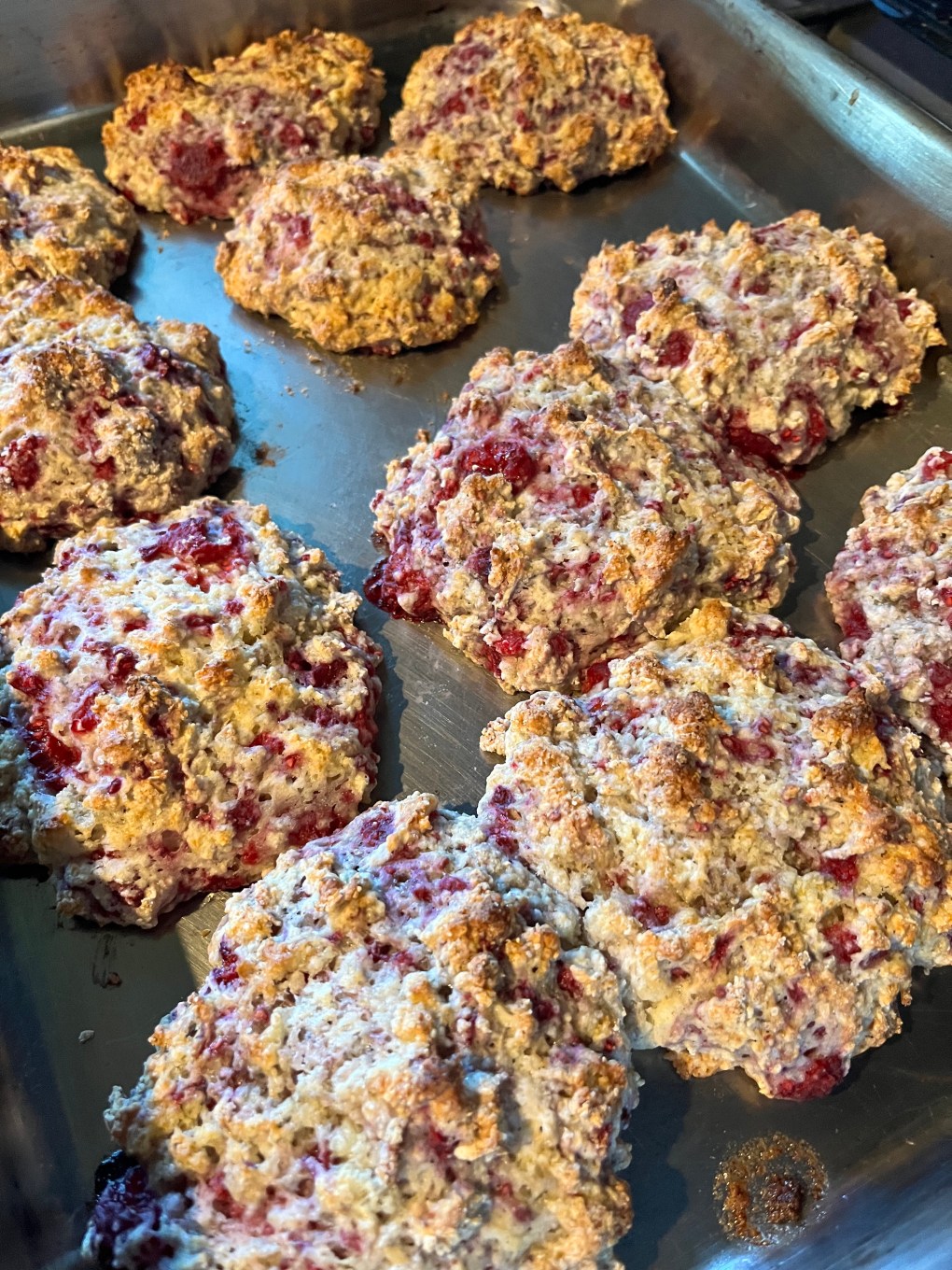
Today is my son’s 8th birthday. To continue with our family tradition, he was served breakfast in bed this morning. Since it was a work day for me, it’s got to be fast and easy but special at the same time. My Heart Healthy Raspberry Scone is perfect for the occasion. It’s delicious, nutritious and extremely yummy! Try this recipe and let me know what you think.

1 cup all-purpose flour

1 cup whole wheat flour

1/4 cup granulated sugar

1 Tbsp baking powder

1/2 tsp baking soda

1/4 cup organic butter

1 cup fresh or frozen organic raspberries

1 cup buttermilk

Combine all-purpose flour and whole wheat flours, sugar, baking powder, baking soda in a large mixing bowl. Cut in butter until mixture resembles coarse crumbs. Stir in raspberries; add buttermilk and mix lightly. Drop by spoonfuls into 10 mounds on a lightly greased baking sheet. Bake in 425F oven for 12 to 15 minutes or until golden.

Each scone has 150 Calories, 5 g fat, 4 g protein, 23 g carbohydrate, and 2 g fiber.