A Guide to Successful Gluten-free Baking

Baking is a science. Unlike traditional wheat-based flours, gluten-free flours typically require additional ingredients that contribute to successful gluten-free baking when it comes to binding, texture, and structure (due to the absence of gluten). Each flour has a different flavor, texture, and nutritional attributes. Understanding the personality of each gluten-free flour will help you choose the most suitable one for your recipe. 

Before we get into the types of gluten-free options and how to make DIY flour blends, let me answer a few basic gluten-free baking questions.

What is Gluten?

Gluten is a type of protein found in some grains that provides structure in baked goods. The most common gluten-containing grains include wheat, barley, and rye. It’s also found In relatives of wheat like spelt and kamut.

Can I just substitute a gluten-free flour for all-purpose in my favorite recipes?

It might be tempting to sub a gluten-free flour for all-purpose 1:1 and hope for the best! However there’s a good chance it might not turn out quite right. Some baked goods are more forgiving than others. Use the information below to determine if and when you need to alter amount and/or add ingredients like starches or binders.

How will gluten-free flour affect the baking time?

Most gluten-free baked goods will require a longer baking time to prevent a gummy, mushy texture. The reason? More liquid. The “toothpick test” isn’t the best indicator of doneness so make sure your oven is calibrated properly and use the time instead.

What about store-bought gluten-free flour? 

Some popular flour companies now make 1:1 gluten-free baking flour blends that already have a proper mix of flours and starches (like xanthan gum). It’s a great option in a pinch because you can use as a 1:1 replacement for all-purpose flour and it mimics results of all-purpose flour. Just note that these are typically rice-based, so they aren’t as nutritionally dense as some of the other options mentioned here. They can also be expensive.

Photo by Klaus Nielsen on Pexels.com

Rice Flour

Light, mild and easy to digest. Often used to make noodles in Asian cuisines. It’s also rich in carbohydrates and low in fat. A common ingredient In store-bought flour blends because it’s texture is most similar to all-purpose.

Chickpea Flour

Chickpea (or garbanzo bean) flour contains significantly more fiber and protein than others on this list. It’s also a good source of plant-based iron. Popular in Middle Eastern and Indian cooking.

Millet Flour

Millet flour has a mild, sweet flavor and a cake-like crumb. It works great in muffins and quick-breads. It’s also a very nutritious whole grain.

Buckwheat Flour

Despite what the name suggests, buckwheat is naturally gluten-free. It’s often used to make noodles (soba), pancakes and Russian blini. This flour adds a beautiful deep brown color to baked goods and has a nutty flavor.

Almond Flour

This may be the most versatile of the bunch. Almond flour has a high fat content which equates to moisture, tenderness and rich flavor. It can produce a “heavy” final product at times which might not rise as easily as traditional wheat flour baked goods. 

Coconut Flour 

It has a sweet coconut flavor and is very high in fiber. Note that it is also highly absorbent, so you’ll only need a small amount (1/3 or 1/4 as much) and you’ll likely need to combine it with another flour for structure.

Oat Flour 

Oat flour is made from milled oats and has a mild flavor. It’s light texture lends soft and fluffy quality to baked goods. Remember that oats need to be certified gluten-free as they are often cross-contaminated. 

Cassava Flour 

Cassava is rich in carbohydrates and high in fiber. This flour is similar to wheat, so works well in a variety of baked goods.

Why use binders and starches? 

In baking, gluten allows dough to come together and become elastic (think pizza dough!). When working with gluten-free flours, you’ll need to add an extra ingredient that does its job. This is where binders (like gums) and starches come in. In baking, these ingredients help hold everything together. They also add much-needed moisture and a more pleasant texture. Too much can lead to a gummy final product so it’s important to use the correct amount. See below for a description of some of the more popular options available. 

CornStarch

Commonly used to thicken sauces and and soups. It’s not usually recommended in baked goods because it can taste too starchy. 

Arrowroot Powder

Flavorless. Similar to cornstarch and a great substitute for those who avoid corn. Use it to thicken sauces or pie filling. Sub 2 teaspoon for every 1 tablespoon of cornstarch. 

Tapioca Starch

Also known as tapioca flour and is used as a thickening agent. It also provides “chew” and elasticity. It can contribute to browning. 

Potato Starch

Similar texture to cornstarch and tapioca starch but derived from white potatoes. Helps bind recipes together and keep baked goods tender. 

Guar Gum

Adds structure or “glue” to baked goods as a way to prevent a crumbly texture. It has 8x the thickening power of cornstarch! 

Xanthan Gum

Similarly to guar gum, xanthan gum helps prevent crumbling in baked goods by providing structure and strengthening elastic networks. It’s corn-based. 

DIY Gluten-Free Flour Blends 

If you want to give gluten-free baking a try and prefer to experiment with your own flour blends, start with one of these! Option one is rice-based and will yield results most similar to all-purpose (wheat) flour. Option two is oat-based, which is a high-fiber choice. Option three is made with almond flour to create a dense, moist and ultra satisfying final product. 

Rice Flour Blend

  • 1 1/2 cups brown rice flour 
  • 1/4 cup white rice flour 
  • 1/4 cup tapioca flour 
  • 1/2 cup potato starch 
  • 1 tsp xanthan gum 

Whisk all ingredients in a large bowl, then transfer to an airtight container for storing. 

Oat Flour Blend

  • 1 1/2 cup [certified gluten-free] oat flour 
  • 1/2 cup tapioca flour 
  • 1 tsp xanthan gum 

Whisk all ingredients in a large bowl, then transfer to an airtight container for storing. 

Almond Flour Blend

  • 2 1/2 cups blanched almond flour 
  • 2 1/4 cups buckwheat flour 
  • 1 3/4 cup potato starch 
  • 3/4 cup arrowroot powder 

Whisk all ingredients in a large bowl, then transfer to an airtight container for storing.

Baking with gluten-free flour may seem a little intimidating at first. But you really can’t go wrong if you start with one of these flour blends. Once you determine the flavor and texture you desire in your baked goods, you can fine tune your flour recipe. Have some fun in your discovery and put your personal stamp on your creation. Happy Baking!
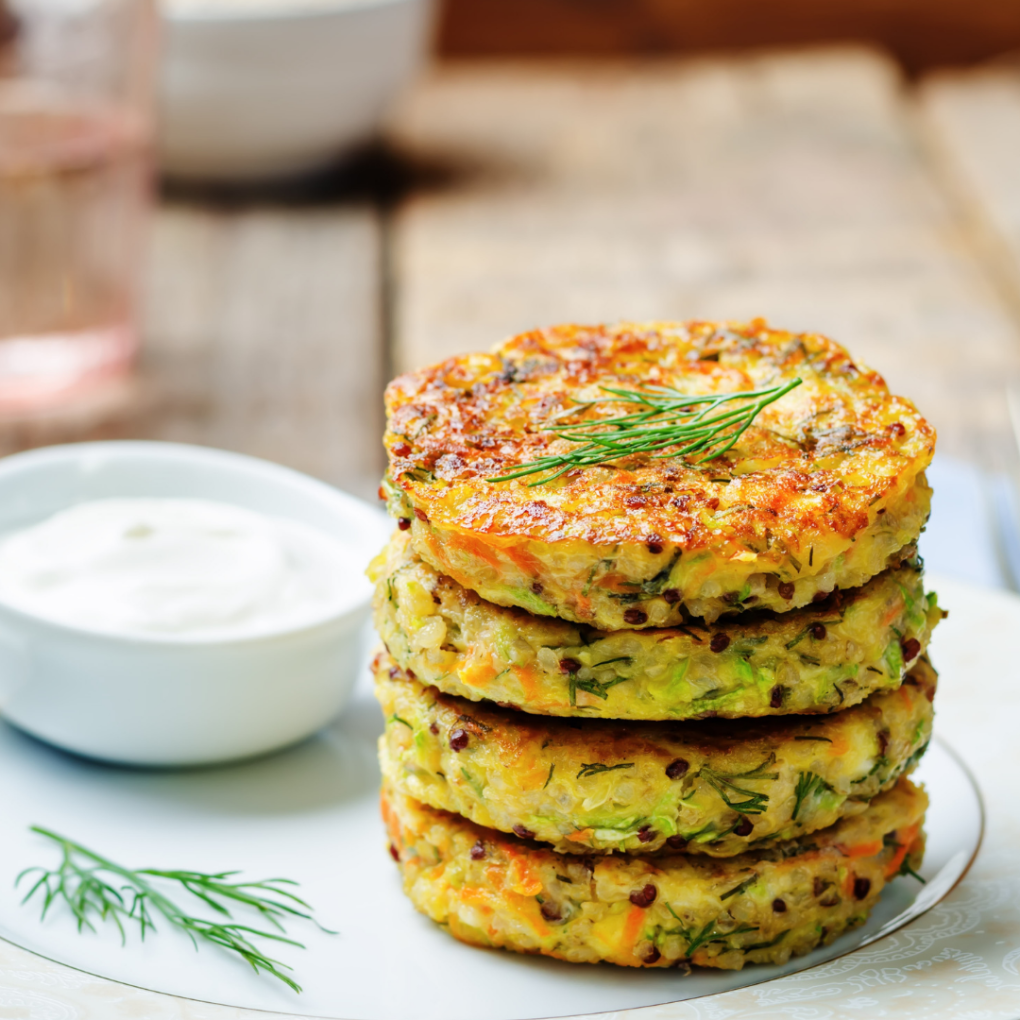
Chickpea Quinoa Fritters (plant-based)

Plant-based Diet helps to reduce inflammation

Sugar, trans-fats, and alcohol are known to contribute to many diseases. But did you know that red meat, especially processed meat, and dairy foods may be pro-inflammatory and can lead to chronic inflammation? Before we get into how a plant-based diet can help, let’s have a look at how inflammation happens in our body.

Acute Inflammation

Can you remember the last time you cut yourself, were stung by a bee, or injured a joint? Your body reacted in a way to heal itself – to return the injured tissue to a normal state. The reaction that caused the uncomfortable pain, redness, and swelling is the result of a protective response known as inflammation. Inflammation is necessary and is not bad, but it has its place – as in the cases cited above when there is an acute injury. The benefit of an inflammatory reaction can be life-saving, so suppressing inflammation completely is not possible. When inflammation becomes chronic, however, extinguishing some of the fire can have big health benefits.

Chronic Inflammation

Chronic inflammation is harder to identify than acute and is a state of prolonged inflammation. The same cells that help with acute injury healing actually do damage if they hang around too long when the inflammatory switch gets stuck in the “on” position. While chronic inflammation is not known to be the primary cause any one disease, it is now widely accepted that it plays a role in diseases such as cardiovascular disease, diabetes, cancer, autoimmune diseases, metabolic disorders, such as overweight and obesity, as well as neurological diseases. Causes of chronic inflammation may include persistent infection, food sensitivities, leaky gut, poor diet, poor sleep hygiene, environment, and exercise without proper recovery. Also, visceral fat, which is the fat tissue stored close to organs in the mid-section, can be a driver of chronic inflammation as it is dynamic and produces a variety of pro-inflammatory hormones.

Anti-Inflammatory Diet

The easiest, low-risk approach to addressing chronic inflammation is with diet. An anti-inflammatory diet is described in research as one that is appropriate in calories, low in processed carbohydrates, high in fiber, high in mono and polyunsaturated fats, higher in omega 3 than omega 6, and high in antioxidants. Translation: High in whole, plant foods with a focus on healthy fats and moderate animal protein intake –at least 75% plant foods and no more than 25% animal proteins.

This type of 75/25 dietary ratio hits all the anti-inflammatory buttons as whole plant foods are almost always less calorie-dense than processed foods, they are high in fiber, and contain a wide variety of disease-fighting antioxidants. Certain plant foods such as chia seed, avocados, walnuts, and olive oil are rich in healthy fats. The other 25% of your plate? High-quality animal proteins. Salmon, sardines, and mackerel are animal proteins of note as they are also excellent sources of omega-3 fats, which are anti-inflammatory.

Transitioning to a Plant-based Diet

By reducing intake of processed foods and replacing them with colorful, whole plant foods you are well on your way to reaping the benefits of an anti-inflammatory diet and reducing risk of many chronic diseases. Curious as how to transition to a plant-based diet with success? I have created an e-book that shows you how to plan, shop, and cook plant foods, including an extensive pantry list to stock up on essential ingredients. This FREE e-book is a great resource to get you started on plant-based eating.


Earth Day Plant-based Meal

In celebration of the 50th anniversary of Earth Day today, I am cooking a plant-based meal for dinner. With shelter-in-place, we have more meals together as a family so our food is central to our conversation at mealtime. This presents a great opportunity to talk to our kids about how our food choices impact the environment.

Working with the ingredients I have in my pantry during this COVID-19 pandemic has created opportunities to be creative! I know most people are stocked up with dried goods such as pasta, rice and canned beans because these items are as depleted in the grocery stores as toilet paper. Just because we are using these staples day after day, it doesn’t mean our diet has to be boring. Whether you are new to eating meatless or just looking for a fresh vegan recipe, I hope you will enjoy this tasty and nutritious bean dish made with one of my favorite spices from the well-loved Oaktown Spice Shop in Oakland, California. For more plant-based recipes, you can click on the link for a free copy of my e-book on Plant-Based Eating.

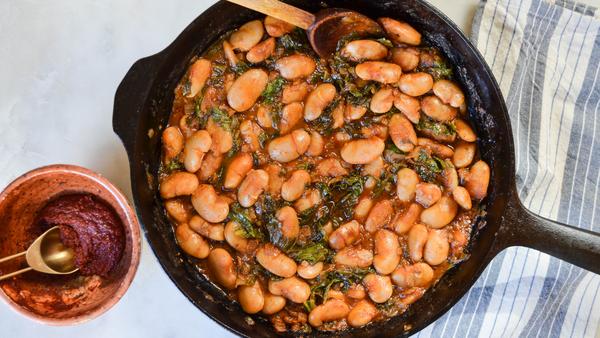
Braised White Beans and Greens with Harissa

Serves 3-4

Ingredients:

1 white or yellow onion, diced
2 cloves garlic, minced
1 teaspoon flake salt
¼ cup olive oil
3 tablespoons Harissa Paste or 1 tablespoon Harissa Powder
½ cup dry white wine
3 cups cooked white beans (such as cannellini), or 2 cans of white beans
2 cups vegetable stock
4 cups chopped greens, such as mustard greens, baby kale or spinach
Juice of half a lemon

Directions:

Heat oil over medium heat. When hot, add onion. Sauté until golden brown, about 7 or 8 minutes, adjusting heat as necessary to avoid burning. Add Harissa, salt and garlic; cook for an additional 1-2 minutes, stirring constantly, until fragrant. 

Add wine and simmer until reduced by half, about 2 minutes. Add beans, stock and a pinch of salt. Bring to a simmer and cook on low, covered, until the beans are becoming soft and creamy, about 20-30 minutes. If you like more of a stew consistency, smash some of the beans with the back of your spoon. Add greens and simmer until tender, about 5-10 minutes depending on the heartiness of the greens you use. 

Season with lemon juice, salt and pepper to taste. Serve with crusty bread.


Best Vegan Food in Cambodia – a recipe from the chef!

Finding good vegan food while traveling in developing countries appears to be a bit easier than ever before! With growing interest in veganism, more restaurants are advertising vegan options to attract travelers. Although meat is often used sparingly in many Southeast Asian cuisine and vegetable dishes are abundant, there’s no guarantee that you can find vegan suitable meals when you step into a Cambodian restaurant. If you are a pure vegan, don’t forget fish sauce and shrimp paste are wildly used in many vegetable dishes in Southeast Asia.

During my last 3 days in Cambodia, I ate in 3 very different styles of vegan restaurants that were all fantastic. The first and most notable one was Chamkar Vegetarian Restaurant in Siem Reap. The food, the setting and the hospitality were all fabulous. Since this is not a TripAdvisor review, I will only focus on the great food that I discovered. Once I learned that  the owner/chef, Nicolas, is French it became clear that French cooking techniques were infused into his dishes. The attention to detail that I love in French cuisine was on full display with the presentation of food as well. They claimed to use locally sourced fresh ingredients such as fresh coconut and I could truly taste the difference. The authenticity of the Khmer cooking with a French twist would be my best description of the food at Chamkar.  We had several dishes: Ratana’s spring rolls, Wedding day dip, Mad Eggplant Lovers (Grilled eggplant and loofah in coconut milk sauce and holy basil), Rediscovering Tofu (Stuffed tofu), and Chocolate cake with ice cream, drizzled with dark chocolate sauce. It’s impossible to pick one favorite dish but the one I would cook at home is the classic Cambodia dish, Mad Eggplant Lovers, which is so fitting for my daughter and me. Nicolas was kind enough to share his recipe (see below) with me when I asked so I hope you will enjoy it too. 

The second restaurant was Masala Dosa Street Kitchen, in Phnom Penh, serving a variety of nutritious dosa. Mmm….Indian street food in Cambodia, how odd, right? Surprisingly, this was a hit! The menu offers many international fusion flavors, such as Szechuan Dosa and Tom Yum Dosa. I chose to try the Eryngii mushroom & coconut cream dosa and it did not disappoint. Dosas are made with lentils & rice, naturally fermented, so no starch, no gluten, high protein and low fat. According to the owner, with roots in India, his mission is to create the healthiest food possible based on Ayurvedic principles. I highly recommend trying this restaurant for an extremely heathy and inexpensive meal.

Eryngii mushroom & coconut cream dosa

The third restaurant was Vibe Cafe, serving high caliber vegan food that you might find in California. It is definitely not a cultural experience but a welcome treat if you’ve been away from home for an extended period of time. For a brief moment, I forgot I was in Phnom Penh until I looked out the widow and saw the poverty on the back streets of the cafe. The food and drinks are all freshly crafted creatively and super yummy but be prepared to open your wallet just a tiny bit wilder. I had the Nourish Sandwich there because I was really missing some wholemeal bread after eating white rice and rice noodles daily for the past couple weeks. The sandwich had a beetroot hummus spread, filled with roasted pumpkin and almond feta, which created a tasty combination of flavors that made me wonder why anyone would need meat or cheese in their sandwich. If you want to try some of the recipes, you can find Vibe Cafe’s cookbook on Amazon.com.

Nourish Sandwich

I was truly inspired by the food I had in these 3 restaurants and can’t wait to expand my vegan cooking repertoire when I get home in a couple weeks.

Grilled Eggplant and loofah in coconut milk sauce and holy Basil

Ingredients for 1 serving

2 Tbsp vegetable oil

1/8 Onion

1 tsp Chili paste

1 tsp Palm sugar 1

Salt to taste

1/2 Tbsp Soy sauce

100 ml Coconut milk

1 Eggplant

50 g Loofah (may substitute with zucchini)

1 handful Bean sprout

1 handful Holy Basil leaf

1 handful Long parsley

1 Tbsp Fried Shallot

1 Tbsp Toasted Coconut

Instructions

STEP 1

First toast the dried coconut in a pan on low heat. Stir it constantly in order to prevent burning. Stop fire when the color is getting golden brown.

STEP2

Put the eggplant on the grill ( BBQ or gas) for 5 min turn over after 2 min. Remove from fire when the skin is slightly burned. Cool down for a while.

Meanwhile prepare the other vegetables. Chop onion finely. Peel the loofah and cut in slice.

STEP 3

Heat vegetable oil in a pan then fry onion for 1 min. Add loofah, chilli paste, palm sugar and stir again, then add coconut milk and salt. Peel the eggplant and cut into bite size then add eggplant, bean sprout and stir 30 seconds (add little water if too thick). At the end, stir in Holy basil for few second 

Remove the pan from the heat, transfer to a plate and serve immediately topped with deep fried shallot, shredded long parsley and toasted coconut.


Vegan Food – Trick or Treat?

Plant-based diet is all the rage but is it healthier for you? There is no argument that eating less animal products is better for your body and for the planet. For years I have been advising the general public, eating a typical North American diet, to reduce meat intake and use meat as a condiment rather than the main focus of their meal. For some, my husband included, it is easier to go cold turkey and avoid meat altogether rather than tease the taste buds and be left feeling unsatisfied. The craving for the flavor of “meat” combined with the desire to go meatless has fueled the surging popularity of meat alternatives in grocery stores and restaurants, including fast food chains.

Trick

The plant-based food space grew 11% between 2018 and 2019 to $4.5 billion in the US which provided more options and also more confusion than ever for consumers. Have you noticed the growing number of plant-based milk, such as soy, almond, cashew, rice, and oat milks, on your grocery shelves? It can certainly be tricky to find vegan foods with the same nutritional profile as the animal products you are replacing. I recently replaced cow’s milk with almond milk and realized that I now only get 12.5% of my usual amount of protein (1 gram of protein in 1 cup of almond milk rather than 8 grams of protein in cow’s milk). That means I need to adjust my diet to eat other high protein foods to make up the deficit. Not easy to do without some nutrition knowledge and meal planning skills!

Plant-based foods designed to replace milk, cheese, and meat often have a lengthy list of ingredients and full of fillers. Have a look at the 18 ingredients in a Beyond Burger: water, pea protein isolate, expeller-pressed canola oil, refined coconut oil, rice protein, natural flavors, cocoa butter, mung bean protein, methylcellulose, potato starch, apple extract, salt, potassium chloride, vinegar, lemon juice concentrate, sunflower lecithin, pomegranate fruit powder, and beet juice extract (the beet juice give the burger its meat-like “blood”). Pretty scary! If you are interested in a complete nutritional comparison between a Beyond Burger and a regular burger, check out this article  in Good Housekeeping. It’s clear that plant-based foods can be highly processed and may not be the healthy alternative we think we are eating.

Treat

Eating a vegan or plant-based diet is not just about avoiding animal products or eating meat look-a-likes. It is about eating an abundance of fruits, vegetables and whole grains. Now, that’s a treat for your health!!!

Plan the main event of your meal around “meaty” vegetables such as mushrooms, eggplant, and squash.  This will easily increase your daily vegetable servings. Consuming enough fruits and vegetables as part of an overall healthy diet reduces the risk of many chronic diseases, including cardiovascular disease, type 2 diabetes, some cancers, and obesity. The 20152020 Dietary Guidelines for Americans recommend that adults consume 1.5–2.0 cup equivalents of fruits and 2.0–3.0 cups of vegetables per day. These goals are much more attainable on a plant-based diet.

The best vegan food comes in its natural form. Nuts, seeds, and legumes are never processed and provide a signifiant source of protein and fiber. Many research studies have shown that the high fiber content in some nuts and legumes is good for your gut bacteria and provides protection to the gut lining and creates a healthier microbiome. The gut microbiome plays a vital role in helping with digestion and benefiting your immune system and many other aspects of health.

Another great source of plant-based protein is whole grains.  Whole grains have much more fiber, B vitamins, and iron than refined grains. Experiment cooking with some of the high protein grains such as quinoa, spelt, kamut, amaranth and millet, just to name a few. Their names may sound intimidating but they boil a lot like rice – just follow the cooking direction on the package and you can’t go wrong. To maximum your nutrition at each meal, learn to combine grains with legumes for complementary protein.

Meat is not necessary a villain. But in a culture where meat consumption is excessive and climate change is a concern, it is definitely a treat to have the food pendulum swing in favor of vegan food.


Cauliflower Rice Risotto with Portobello Mushrooms

There are many reasons why cauliflower rice is so popular. It is super easy and fast to cook, and most of all, super nutritious! What better than a substitute for starch, either as a rice or a pizza crust, that you can eat guilt-free because it is ultra low cal and low carb. At the same time, you are banking your daily servings of vegetables without even trying.

In most dishes that use rice, you should be able to substitute with cauliflower rice. Just be aware that cauliflower will not have the starchy texture and mouth-feel that you get with white rice. without the starch, you will notice that cauliflower rice doesn’t absorb sauces as well and nor does it give a creamy texture, as in the case of risotto. That said, I was very excited with how my cauliflower risotto turned out last night and I think you will like it too!

Mushroom Cauliflower Rice Risotto

1 small head of cauliflower (2 cups riced cauliflower)

2 Tbsp olive oil

1/2 chopped onion

1 chopped Portobello mushroom cap

1/4 cup vegetable broth or white wine

Salt and pepper

Directions

  1. Use a cheese grater or a food processor to grate the head of cauliflower. You can also buy riced cauliflower in most large supermarkets.
  2. In a large pan, heat the olive oil over medium heat.
  3. Sauté onion in olive oil.
  4. Add mushroom to pan and cook until tender.
  5. Stir in riced cauliflower and vegetable broth or wine, and cook for 10 minutes.
  6. Season with salt and pepper. Option to add Parmesan cheese if you are not a vegan.


Truth about Turmeric

Turmeric really doesn’t need much introduction these days. For those who don’t do much cooking, it is a bright yellow spice commonly used in Indian cooking. If you are wondering what business turmeric has in finding its way into our lattes, it is because of its super food status in culinary medicine. Turmeric has potent antioxidants and anti-inflammatory effects which can potentially prevent and treat arthritis, cancer, heart disease and diabetes.  As a food enthusiast, I am no stranger to cooking with turmeric but I am curious whether drinking a cup of turmeric tea latte per day (a.k.a Golden Milk) will keep my knee pain away.

The medicinal effect of turmeric is attributed to its active compound, curcumin. It has been used to help prevent ailments for generations in Asia. Research indicates that you need to get 500 to 1,000 milligrams of curcumin per day for an anti-inflammatory effect. The average Indian diet provides around 60-100 milligrams of curcumin (2,000-2,500 milligrams of turmeric) per day. In other words, you would need to consume more than 10 times the amount of turmeric than what’s in a typical Indian diet. The truth is that it is not easy to get a therapeutic dose of curcumin without some supplementation. However, if you decide to take on the challenge with eating real food for your curcumin,  keep in mind that you will need to add at least 2 1/2 Tablespoons (17 grams) of turmeric a day in your diet to get 500 milligrams of curcumin. Also, curcumin is not easily absorbed and it needs to be combined with fat and black pepper to enhance its absorption. I am sharing my recipe of the Oven Roasted Turmeric Cauliflower that is super easy and delicious with an abundant amount of turmeric. Cauliflower is naturally high in antioxidant so this packs an extra anti-inflammatory punch.

Along with boosting curcumin in your diet to flight inflammation, it is beneficial to avoid inflammation inducing foods – sugar, high-fructose corn syrup, artificial trans fats, refined carbohydrates, processed meats, and alcohol – at the same time. This is a good way to double down on the battle against inflammation!

Cauliflower

Oven Roasted Turmeric Cauliflower

1 large head of cauliflower

1/4 cup Olive oil

2 Tbsp turmeric

1/2 tsp salt

1/2 tsp pepper

  1. Preheat oven to 425F.
  2. Cut cauliflower into florets and put on a rimmed baking sheet.
  3. whisk olive oil, turmeric, salt and pepper in a bowl and drizzle over cauliflower to coat pieces.
  4. Roast cauliflower in oven until tender and slightly brown for 15-25 minutes, turning halfway.